
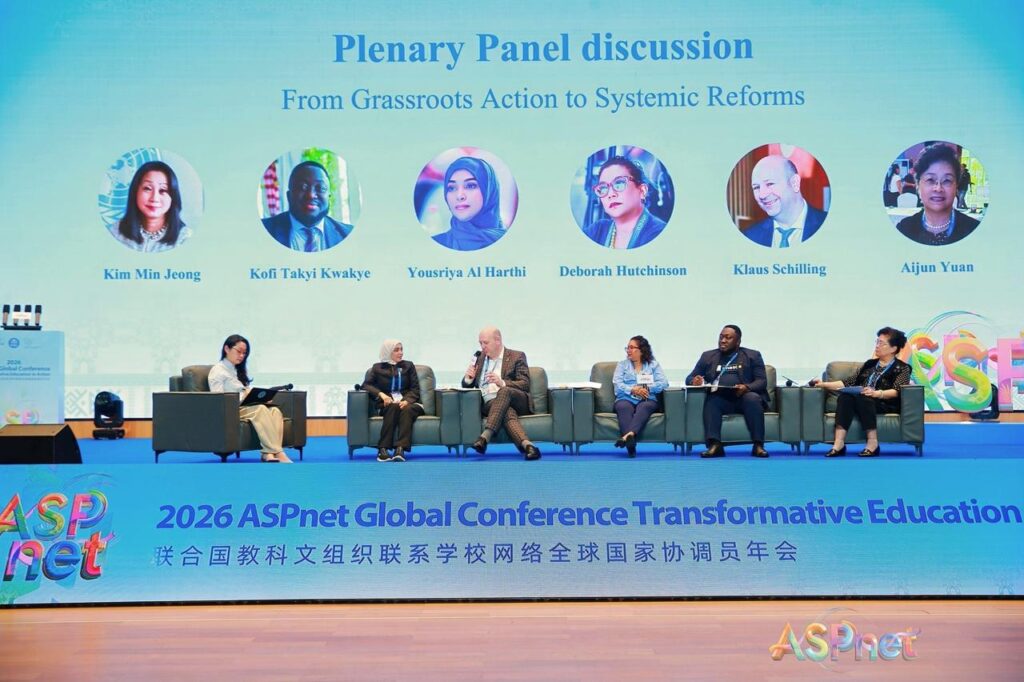
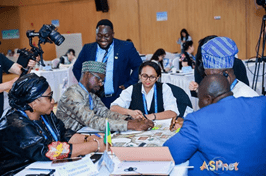
Attending the ASPnet Global Conference 2026 in Sanya, China was not just another international meeting – it was a moment of pause, reflection, and rethinking. It offered me not just insights into global education trends, but a renewed perspective on what education can and should achieve in our rapidly changing world. Bringing together educators, policymakers, and institutions from across the world, the conference served as a powerful reminder that education is no longer just about knowledge acquisition; it is increasingly about relevance, resilience, and real-world impact.
As conversations unfolded and experiences were shared, one thing became increasingly clear: education systems across the world are evolving from theory-driven models to action-oriented approaches. Schools are no longer seen as isolated spaces for academic instruction, but as active environments where learners engage with real-life challenges and contribute meaningfully to their communities. Through the UNESCO ASPnet network, this vision is being translated into practice – connecting schools globally around shared goals in Education for Sustainable Development (ESD) and Global Citizenship Education (GCED).
One of the most compelling insights from the conference was the growing emphasis on practical learning. Countries are rethinking traditional education models that prioritize examinations, shifting instead toward systems that nurture critical thinking, problem-solving, and values-driven learning. The “whole school approach” exemplifies this shift. It recognizes that education extends beyond textbooks, influencing behaviour, shaping attitudes, and fostering community engagement. Issues such as climate change, health, and citizenship are no longer abstract topics – they are becoming integral to how students learn and interact with the world.
Equally important was the focus on teachers as central agents of transformation. The conference highlighted that meaningful change in education cannot happen without investing in teacher development. Models that promote continuous learning – through self-reflection, peer collaboration, and expert support – are proving effective in strengthening teaching practices. These approaches offer valuable lessons for Ghana, where empowering teachers could significantly enhance the quality and impact of education delivery. In the same vein, discussions on social and emotional learning underscored the importance of student well-being as a foundational element of education, rather than an optional addition.
Technology also featured prominently as a driver of transformation. Platforms such as ASPnet Connect are demonstrating how digital tools can improve coordination, enhance data management, and facilitate collaboration across borders. For Ghana, this presents a clear opportunity to strengthen the use of digital systems within the ASPnet framework, ensuring better tracking of progress, improved communication, and more informed decision-making.
Ghana’s own contribution to the global conversation did not go unnoticed. Ghana’s presentation on school gardening projects sparked significant interest among participating countries. These initiatives, though simple and cost-effective, demonstrate how practical learning can address multiple goals simultaneously – promoting environmental awareness, improving nutrition, and introducing entrepreneurial skills. The positive reception affirmed that Ghana has innovative, scalable models that can contribute meaningfully to global education efforts.
However, the true value of the conference lies not in the ideas shared, but in the actions that follow. For Ghana, the way forward is both clear and achievable. Scaling up successful initiatives like school gardening, strengthening peer learning among ASPnet schools, and improving data and digital coordination systems are immediate steps that can drive impact. More importantly, there is a need to deepen the connection between schools and communities, ensuring that learning remains relevant to local contexts and challenges.
At a broader level, the Ministry of Education has a critical role to play in harnessing the full potential of ASPnet in Ghana. By expanding the network across all sixteen (16) regions, integrating ASPnet principles into national education strategies, and investing in continuous teacher development, the Ministry can position ASPnet as a key driver of innovation within Ghana’s education system. Strengthening partnerships – both locally and internationally – will further enhance learning outcomes and create new opportunities for collaboration.
The ASPnet Global Conference 2026 has reinforced an important message: transforming education is not a distant ambition – it is an ongoing process that requires commitment, adaptation, and collaboration. For Ghana, the opportunity is not just to learn from global experiences, but to lead with practical, impactful solutions.
As the conversations in Sanya end, the responsibility now shifts to implementation. With the right focus and sustained effort, Ghana can leverage the ASPnet platform to transform its schools into hubs of innovation, equipping learners not just for exams, but for life.
Author:
Mr. Kofi Takyi Kwakye, Programme Officer, Education