Communication and Information (C.I) Sector
Programmes
DO YOU WANT MORE INFORMATION?
For any information or to book a meeting, kindly contact us via any of the mediums below.
Office Location:
Starlet 91 Road, Ministry of Education – Ghana.
Phone Number:
+233 302 666 042 (Main Line) | +233 302 960 820 (SG Secretariat)
Email: info@unescoghana.gov.gh
The Sector works to strengthen:
- Freedom of Expression and Media Freedom – Supporting independent, pluralistic and sustainable media systems, and advancing global efforts on the safety of journalists and the fight against impunity.
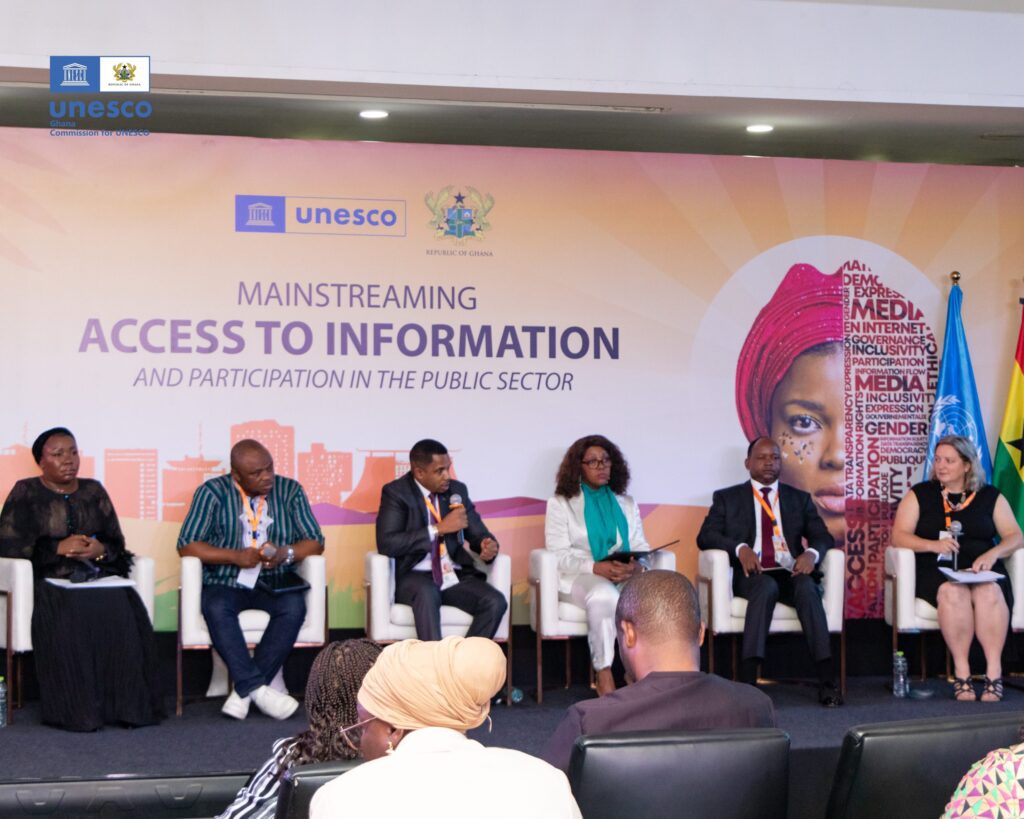
- Access to Information and Good Governance – Promoting transparent legal and policy frameworks that enhance accountability and citizen participation.
- Media and Information Literacy (MIL) – Building the capacities of citizens, particularly youth, to critically engage with information, counter misinformation and participate responsibly in digital spaces.
- Inclusive Digital Transformation – Bridging digital divides and fostering human rights–based approaches to digital technologies and governance.
- Protection of Documentary Heritage – Safeguarding and promoting access to documentary heritage through initiatives such as the Memory of the World Programme.
The C.I Sector in Ghana
The Ghana Commission for UNESCO aligns these priorities with national development efforts through collaboration with key stakeholders, including government institutions, regulatory bodies, media organizations, academia and civil society.
National actions focus on advancing Media and Information Literacy, strengthening access to information frameworks, promoting press freedom and the safety of journalists, and enhancing digital inclusion particularly for youth and marginalized groups. These efforts are supported through UNESCO’s intergovernmental programmes, including the Information for All Programme (IFAP) and the Memory of the World (MoW) Programme, which safeguard Ghana’s documentary heritage and promote access to knowledge for all.
Through policy dialogue, capacity-building and multi-stakeholder partnerships, the C.I Sector contributes to democratic governance, social inclusion and sustainable development in Ghana.