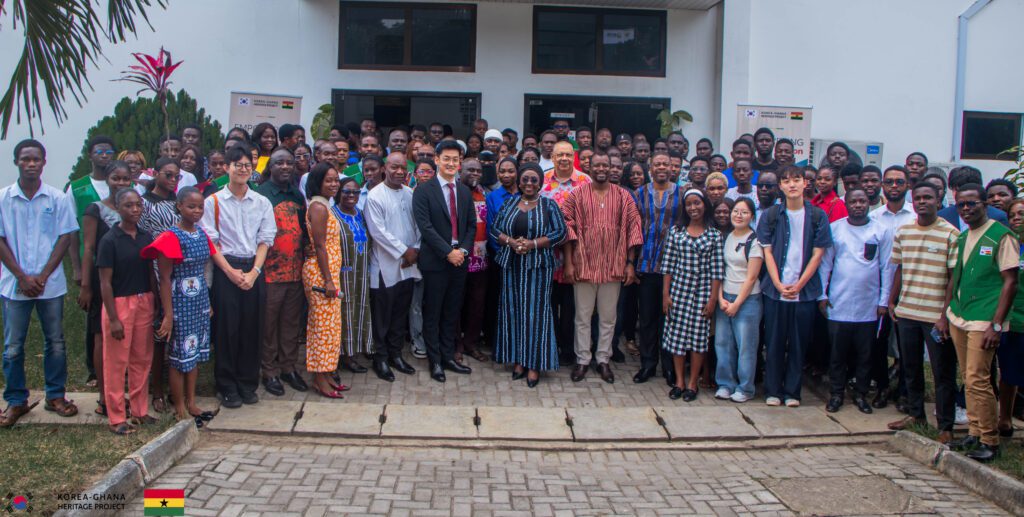
Government officials, heritage professionals, researchers, traditional authorities and students gathered at the Cedi Conference Centre, University of Ghana, Legon, for the Heritage and Climate Change Symposium, marking the public introduction of the Korea-Ghana Heritage Project — a five-year, USD 4 million partnership aimed at building Ghana’s capacity to protect its historic forts and castles from the escalating effects of climate change.
Held under the theme “Bridging Science, Policy and Communities for Climate Resilient Cultural Heritage,” the symposium brought together students from the Department of Archaeology and Heritage Studies, Centre for Climate Change and Sustainability Studies, Department of Earth Science (Geology) and the Institute of African Studies. Other stakeholders include the Ghana Commission for UNESCO, the Ghana Museums and Monuments Board (GMMB), the Ministry of Tourism, Culture and Creative Arts, representatives of the Korean National Commission for UNESCO and a wide range of stakeholder institutions including the Environmental Protection Agency, the Ghana Meteorological Agency and the Ghana Hydrological Authority.
Opening the Conversation
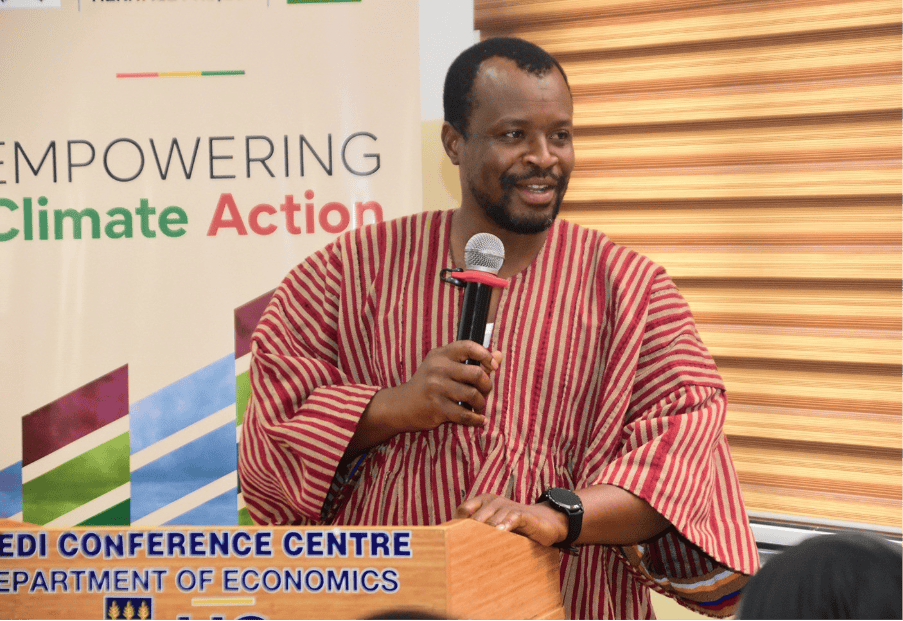
In his welcome statement, the Ag. Secretary-General of the Ghana Commission for UNESCO, Prof. Osman Damba Tahidu, noted that climate change is increasingly affecting cultural heritage through coastal erosion, flooding and sea-level rise, and stressed that protecting heritage means safeguarding not only physical structures but also the memories, identities and communities connected to them. He described the symposium as a key milestone for the Korea-Ghana Joint Research on Climate Change and the Cultural Heritage Ecosystem in Ghana, and urged participants to ensure that discussions translate into stronger research, better policy, increased capacity, and practical action that keeps communities at the centre.
A Call for Policy, Science and Community Action
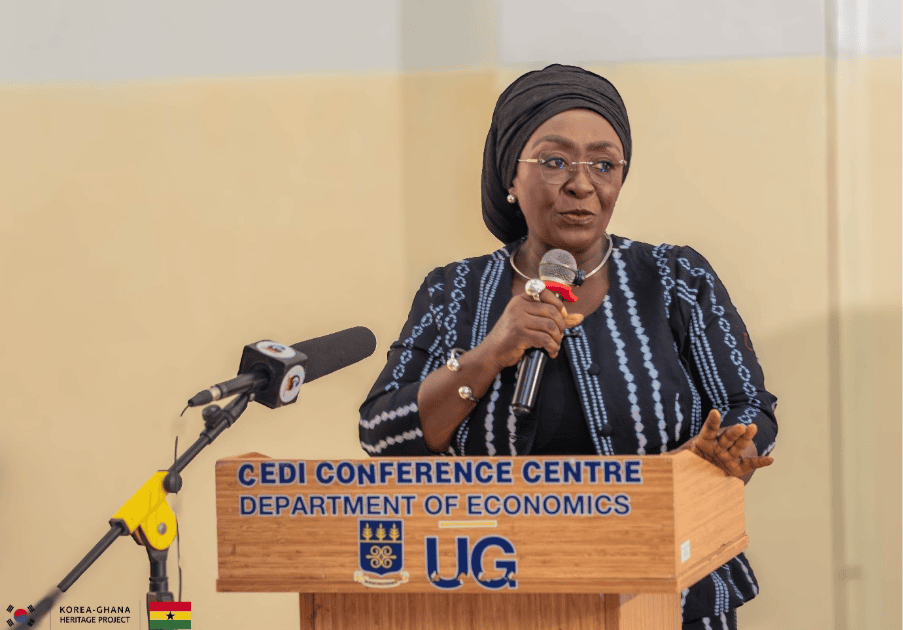
Delivering the keynote address, the Minister for Tourism, Culture and Creative Arts, Hon. Abla Dzifa Gomashie (MP), thanked the Government of the Republic of Korea, the Korea Heritage Service, the Korean National Commission for UNESCO and the Korea UNESCO Research Institute for a partnership she described as central to building a robust national heritage and climate change policy and strengthening the capacity of GMMB and other stakeholders.
The Minister called for a threefold national response: strengthening legal and planning frameworks to mainstream heritage protection into climate adaptation and disaster risk reduction policy; investing in research, monitoring and conservation science through partnerships with universities and international experts; and empowering local custodians, traditional authorities, artisans and youth so that conservation is community-led and economically sustainable.
About the Korea-Ghana Heritage Project
Running from 2026 to 2030 and implemented by the Korean National Commission for UNESCO and the Ghana Commission for UNESCO, the “Empowering Climate Action” project focuses on six pilot sites among Ghana’s 28 Forts and Castles in the Greater Accra Region: James Fort, Ussher Fort, Christiansborg Castle, Fort Augustaborg , Fort Vernon and Fort Fredensborg. Over five years, the project will deliver a national climate-risk assessment and risk map, an online heritage monitoring platform, a National Heritage Climate Change Response Policy, climate change response plans for the forts and castles, West Africa regional guidelines, and sustained capacity-building for policymakers, field managers and local communities.
Governance of the project is anchored by a Project Steering Committee co-chaired by the Ministry of Tourism, Arts and Culture and the Ghana Commission for UNESCO, supported by a Technical Committee chaired by Prof. Kodzo Gavua of the Ghana Heritage Committee, with representation from GMMB, the Ministry of Finance, the Ministry of Environment, Science, Technology and Innovation, the UNESCO Accra Office and local community representatives.
Closing Longstanding Gaps
The project responds to constraints that have limited Ghana’s response to climate threats at its heritage sites. The Ghana Museums and Monuments Board currently has a shortage of specialised personnel and limited research and survey capacity. Data on how climate change affects heritage sites remains scarce, and institutions lack a systematic way to manage climate risk. Without stronger preventive conservation and monitoring systems, damage tends to be caught only after it happens.
Long-term Benefits of the Project
By 2030, the partnership is expected to leave Ghana with a functioning climate-vulnerability database and GIS system, trained heritage managers and policymakers, and a national policy that mainstreams heritage protection into climate adaptation planning. It will also produce practical climate-response plans for the six forts and castles, regional guidelines for West Africa, and stronger coordination between the institutions responsible for protecting these sites. Community participation sits at the centre of this shift, with local custodians positioned as long-term partners in conservation rather than bystanders.
Officials say the model built through this partnership could extend beyond the six pilot sites, offering a blueprint for protecting other heritage properties across Ghana facing similar climate threats.
The symposium continued with technical presentations and a panel discussion on practical recommendations for advancing climate-resilient heritage management in Ghana.